Compliance & Security
Disaster recovery for documents: a plan you can test
Fire, flood, ransomware or one wrong click can take your documents away in an afternoon. A plan decides how fast they come back and how much you lose, and it only counts once you have restored from it.
Ademero Team5 min read
Most small and mid-size organizations have backups. Far fewer know how long a restore takes, whether the backup includes everything the document system needs to work, or whether ransomware could reach the backup too. This guide is for the IT lead or office manager who owns the answer. It sets targets, works through one firm's plan, and ends with a test you can run this month.
Two numbers per document type
| Target | The question | Example |
|---|---|---|
| Recovery time objective (RTO) | How long can we work without these documents? | Client tax files in April: 4 hours |
| Recovery point objective (RPO) | How much recent work can we afford to redo? | One day of scanned mail: acceptable |
Set them per document type, with the people who use the documents, before you choose any technology. Shorter targets cost more, so spend them where downtime hurts.
A worked plan: a 50-person accounting firm
The firm runs Content Central on one server in its office, with CapturePoint 6 on two scanning PCs. Client files, engagement letters and workpapers live in it. The back room still holds ten years of paper files.
| Document type | RTO | RPO | Why |
|---|---|---|---|
| Current-year client files and workpapers | 4 hours (1 day off season) | 1 hour | Deadlines do not move |
| Engagement letters and signed authorizations | 1 day | 1 day | Needed before work starts |
| Closed prior-year files | 1 week | 1 day | Rarely opened, but must survive |
| Paper in the back room | Not recoverable today | Not applicable | There is no second copy |
That last row is the finding that changes the plan; more on it below.
What to back up
A document system is more than the files. To restore it you need all three parts, from the same point in time:
- The database. Content Central keeps index values, version history, permissions, workflow state and the audit trail in SQL Server. Back it up with SQL Server's own backups, at least as often as the RPO, with transaction log backups for the one-hour target.
- The document storage. The documents themselves are stored as files on disk, in a storage area per catalog, in folders built from their index values. A file-level backup captures them. Content Central can also mirror every file it writes to a second storage location as it writes it.
- The server setup. Windows Server and IIS configuration, certificates and connection settings, or simply an image of the whole virtual machine.
The copy ransomware cannot reach
Ransomware looks for backups and encrypts them too. The 3-2-1 rule (three copies, two kinds of storage, one offsite) is the start; add one copy that is offline or immutable, which nothing on the network can change. For the firm:
- 01
Copy 1: the live server
Plus the secondary storage mirror on a separate disk, so a failed drive does not mean waiting for a restore. - 02
Copy 2: nightly backup to a NAS
Database and documents, kept 30 days, for fast restores of deleted or damaged files. - 03
Copy 3: offsite and immutable
A cloud backup with object lock, or rotated drives taken home, that cannot be altered for 30 days.
Separate the credentials: the account that runs the backups should not be an everyday admin login, and the immutable copy should need a different one again.
Paper has no backup
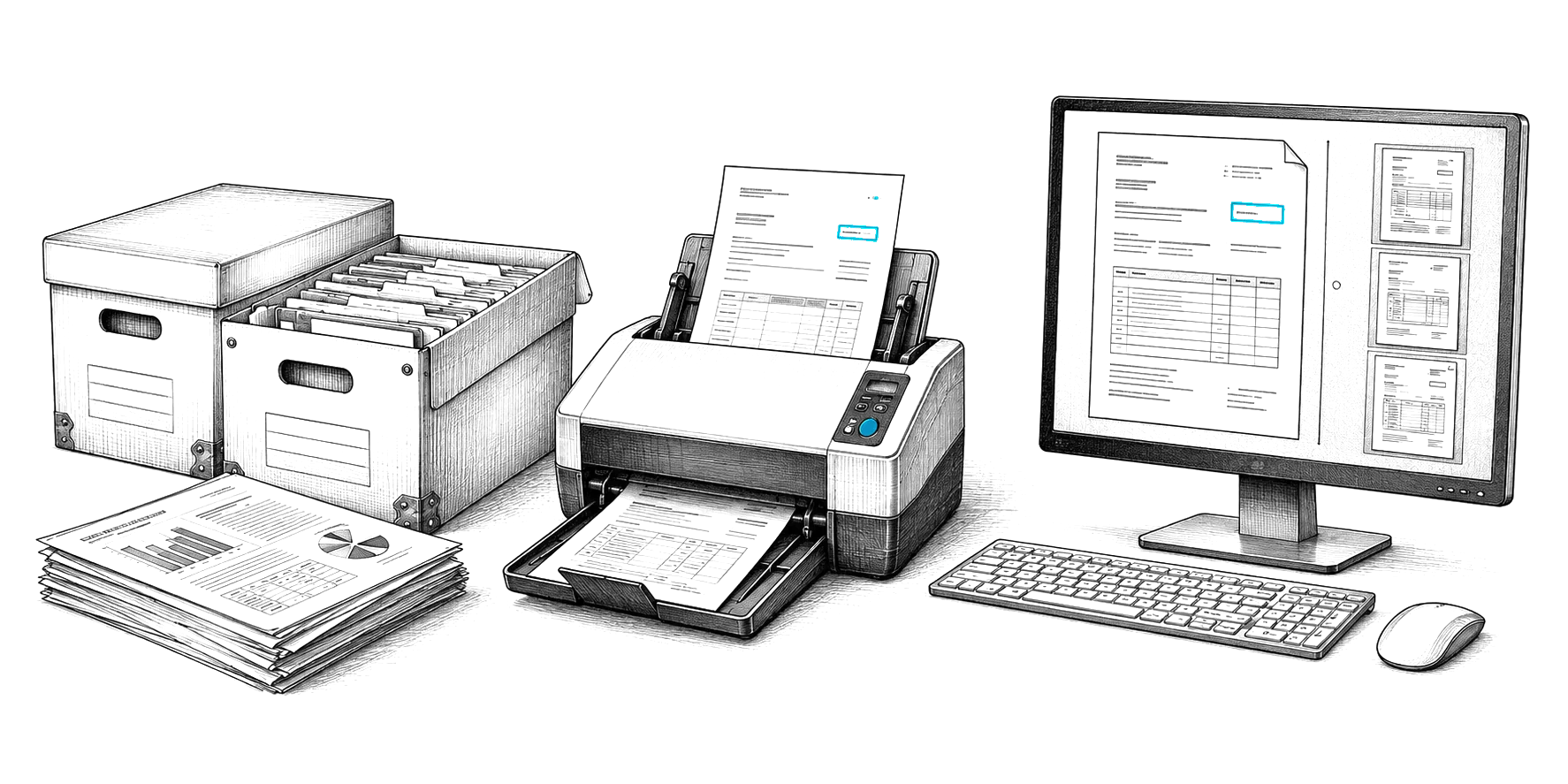
A fire in the back room is unrecoverable. Scanning the paper that matters is often the single biggest improvement in the plan. The firm scanned closed files from the last seven years in evening batches, newest first, and kept the paper until each batch had been checked. See turning archive boxes into searchable records for how to run that project.
Proving it works
- Daily: backup jobs completed without errors. An alert if they did not.
- Monthly: restore five documents chosen at random, from the NAS copy, and time it.
- Twice a year: restore the whole system, database and documents together, to a test server. Search for a client, open a document, check its version history. Time it against the RTO.
- Yearly: walk through the plan with the people named in it, including who calls clients if the office is closed.
Prefer not to run the server at all? Content Central also runs in the cloud, so there is no server in your office to run. Either way, CapturePoint 6 turns the vulnerable paper into searchable files on your own PC.
Get the next guide by email
Practical notes on documents, capture and automation. No spam, unsubscribe any time.
Free live demo
Talk through recovery for your own document system.
Book a free demo and we will show you around, answer your questions and run your real paperwork through it. No cost, no pressure.
- A live tour of the products that fit your work
- Your own documents, set up and shown working
- Your workflow and process, mapped with you
- Straight answers from people who build it