Transform Your Campus Into aDigital Powerhouse
From application to alumni, digitize every document, automate every process. Secure. Fast. Future ready.
200+
Universities Trust Us
50M+
Student Records
Education-Grade
Secure Platform
1000+ hrs
Time Saved Daily
The Education Sector's Document Management Challenge
Educational institutions face unique document management challenges that most industries never encounter. From K-12 schools to major research universities, the volume and complexity of documents can be overwhelming. Student records, transcripts, applications, financial aid forms, personnel files, accreditation documentation, research papers, and administrative records create a massive document ecosystem that must be managed with precision, security, and compliance.
Traditional paper-based systems and disconnected digital solutions create significant operational inefficiencies. Registrars spend hours manually processing transcript requests. Admissions teams struggle to track thousands of application documents across multiple formats. Compliance officers face audit anxiety due to scattered records and unclear retention policies. IT departments battle with storage costs that grow exponentially each semester. Meanwhile, students and parents expect instant access to documents from any device, at any time.
The regulatory landscape adds another layer of complexity. FERPA regulations require strict access controls and comprehensive audit trails for student records. Accreditation bodies demand well-organized documentation that can be produced on short notice. State and federal grant programs require meticulous record-keeping. Data privacy laws vary by jurisdiction, creating compliance headaches for institutions with students from multiple states or countries. A single compliance failure can result in significant financial penalties, loss of accreditation, or damage to institutional reputation.
Modern document management systems designed specifically for education solve these challenges by centralizing all documents in a secure, searchable platform. Automated workflows eliminate manual data entry and reduce processing times from weeks to hours. Role-based access controls ensure FERPA compliance while giving authorized users instant access to the documents they need. Intelligent retention policies automatically archive or dispose of documents according to institutional policies and legal requirements. The result is a campus that operates more efficiently, complies more easily, and serves students better.
Your Entire Campus.One Digital Ecosystem.
Click on any building to see how we transform document chaos into digital excellence across your entire institution.

From Application to AlumniEvery Step Accelerated
Watch how we transform months into minutes at every stage of the student journey.
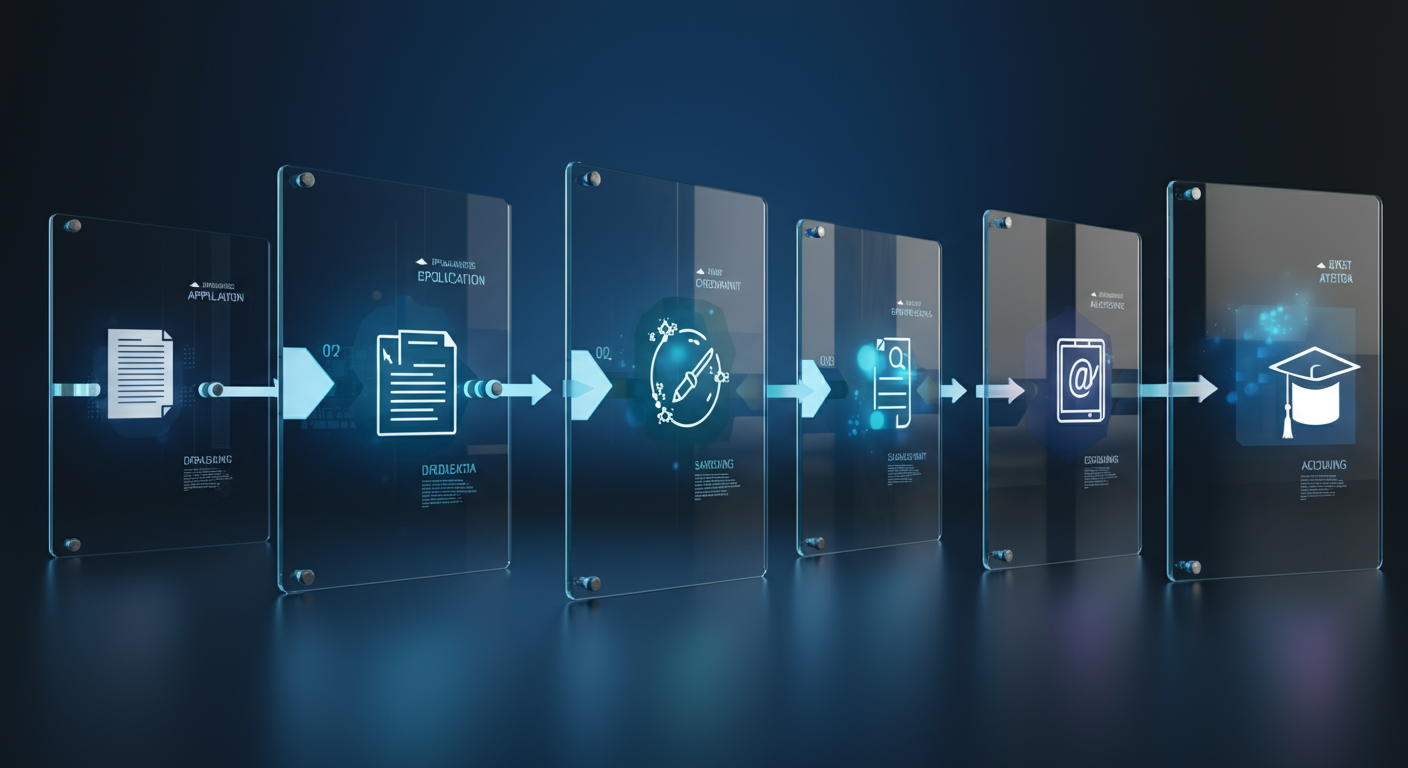
Application
2 weeks → 2 days
Digital applications, instant document verification
Enrollment
1 week → 1 hour
Automated enrollment, digital forms & signatures
Academic Journey
4 years of efficiency
Digital coursework, instant grade access
Graduation
1 month → 1 week
Digital diplomas, blockchain verification
Alumni
Lifetime access
Forever transcript access, career documents
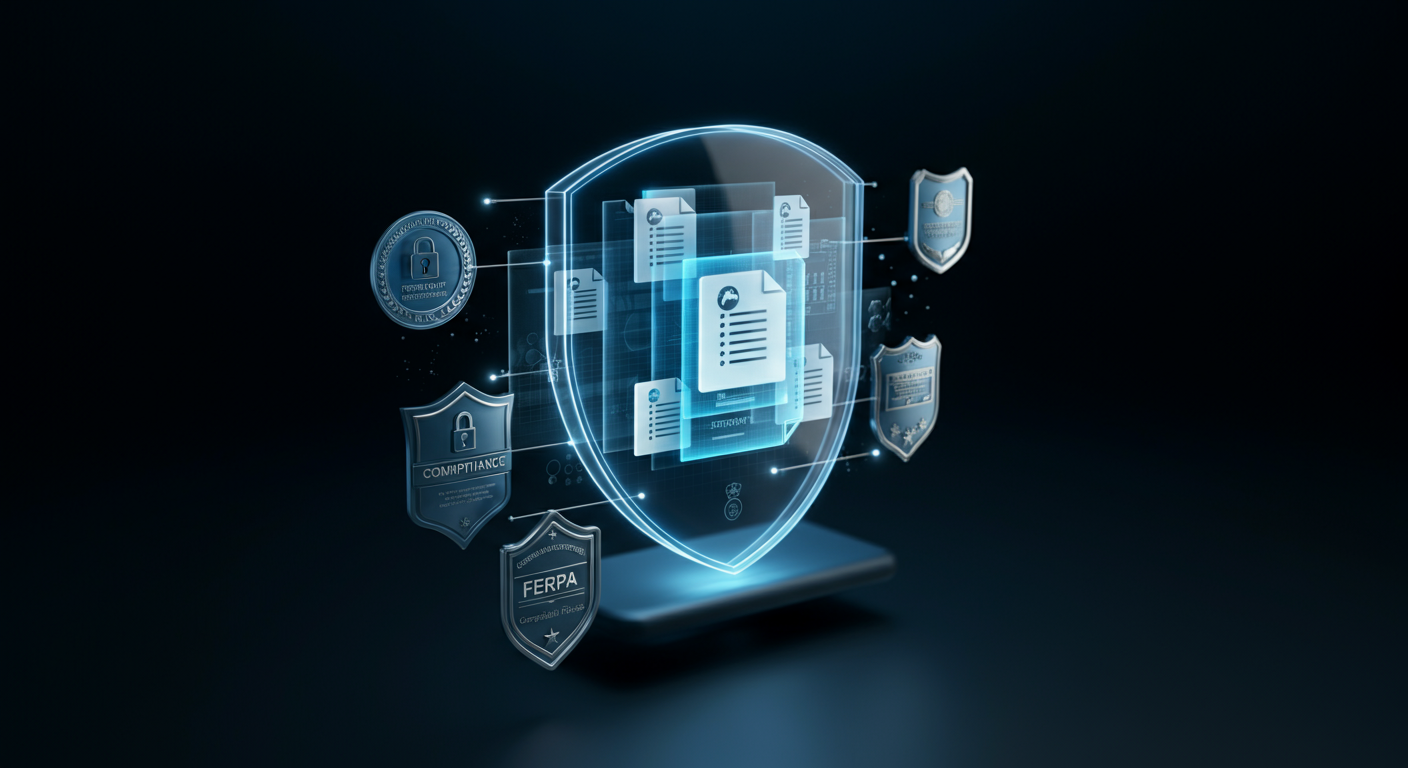
Security That LetsYou Sleep at Night
Multiple Campuses.One Unified System.
Whether you have 2 campuses or 20, manage everything from a single dashboard. Real-time synchronization. Zero data silos.
24/7
Global Access
<1 sec
Sync Speed
Unlimited
Concurrent Users
Real-time
Unified Analytics

See Your SavingsIn Real Numbers
Calculate Your Campus Savings
5,000
1
Paper Savings
$60,000
Time Saved
12,500 hrs
Storage Savings
$15,000
Compliance
$50,000
Total Annual Savings
$137,500
Frequently Asked QuestionsAbout Education Document Management
How does your system ensure FERPA compliance for student records?
Our education document management system is designed from the ground up with FERPA compliance as a core requirement. The Family Educational Rights and Privacy Act (FERPA) mandates strict controls over student education records, and our platform implements multiple layers of protection to ensure your institution meets these requirements.
First, we implement granular role-based access controls that allow you to define exactly who can view, edit, or share student records. Each user is assigned specific permissions based on their job function, ensuring that faculty can only access records for their current students, registrars have broader access for official functions, and parents or eligible students can only view their own records. Every access attempt is logged with a timestamp, user identity, and action taken, creating a comprehensive audit trail that demonstrates compliance during reviews or investigations.
Second, our platform includes built-in consent management features. When a student record needs to be shared with a third party (such as another educational institution, employer, or scholarship organization), the system requires documented consent before release. We provide electronic consent forms that are securely stored and linked to the disclosure record, making it easy to prove proper authorization was obtained. The system also tracks disclosure dates, recipients, and purposes, maintaining the complete disclosure history required by FERPA regulations.
Third, we implement automatic redaction and selective sharing features. When student records need to be shared for legitimate purposes like accreditation reviews or research studies, our system can automatically redact personally identifiable information to create directory information or de-identified datasets. This ensures that you can fulfill legitimate institutional needs while maintaining strict privacy protections. The platform also supports FERPA's exceptions for health and safety emergencies, school officials with legitimate educational interests, and other legally permitted disclosures, with workflows that document the justification for each exception.
What types of student records can your system manage across the student lifecycle?
Our platform manages the complete spectrum of student records from initial inquiry through alumni relations. During the recruitment and admissions phase, the system handles application materials including essays, recommendation letters, test scores, transcripts from previous institutions, financial aid applications, and admissions decisions. All documents are automatically indexed and linked to the student's profile, making it easy for admissions counselors to review complete applications and track decision workflows.
Once students enroll, the system becomes the central repository for their entire academic journey. Academic records include course registrations, grades, transcripts, degree audits, academic standing notices, and graduation applications. Administrative records cover housing contracts, meal plan selections, parking permits, disciplinary records, and accommodation documentation for students with disabilities. Financial records include tuition billing statements, payment receipts, financial aid award letters, scholarship documentation, and student account holds. All these documents are organized chronologically and by category, with powerful search capabilities that let staff find any document in seconds.
For student services, the platform securely manages health records from campus health centers (with HIPAA compliance features), counseling service documentation, career center materials like resumes and interview feedback, study abroad applications and agreements, internship or cooperative education paperwork, and athletic eligibility documentation. Each type of record has appropriate access controls—health records are restricted to authorized medical staff, while academic advisors have access to academic and enrollment information but not medical or disciplinary records.
After graduation, the system continues to serve alumni by maintaining permanent access to official transcripts, diplomas, and degree verification documents. Alumni can log into a secure portal to request official transcripts for graduate school applications or employment verification. The system also manages alumni engagement records including donation history, event attendance, and career updates. This cradle-to-grave approach ensures that your institution maintains organized, accessible records throughout each student's lifetime relationship with your institution, while maintaining appropriate security and privacy controls at every stage.
How does the system support accreditation documentation and institutional effectiveness reporting?
Accreditation reviews are high-stakes events that require institutions to produce extensive documentation demonstrating compliance with standards. Our document management system transforms accreditation preparation from a stressful scramble into an organized, manageable process. The platform includes pre-configured document collections for major accrediting bodies including regional accreditors (HLC, SACSCOC, NEASC, etc.), specialized program accreditors (ABET, AACSB, ACEN, CACREP, etc.), and professional licensure boards.
For each accreditation standard or criterion, you can create a document folder that automatically pulls relevant evidence from across your institution. For example, Standard 3 on "Teaching and Learning: Quality, Resources, and Support" might automatically include faculty credentials, course syllabi, assessment reports, library holdings data, technology infrastructure documentation, and student support service descriptions. The system maintains version control, so you can track how your evidence has evolved over time and demonstrate continuous improvement to accreditors.
The platform also supports collaborative evidence gathering across departments. When preparing for a comprehensive review, your accreditation liaison can assign evidence collection tasks to department chairs, program directors, and administrative units. Each person receives notifications about their assigned documents, can upload materials directly to the appropriate standard folders, and can mark items complete. The liaison has a dashboard showing completion status across all standards, making it easy to identify gaps and follow up with responsible parties. This distributed approach reduces the burden on any single person and ensures that subject matter experts provide the most relevant and current documentation.
Beyond the accreditation visit itself, our system supports ongoing institutional effectiveness and assessment activities. Create automated workflows that collect assessment data, student learning outcomes evidence, program review documentation, and strategic planning materials on regular schedules. Set up retention schedules that keep accreditation documentation for the required seven years after a review, while archiving or disposing of superseded materials. Generate reports showing document completion rates, evidence quality scores, or gaps in your evidence inventory. This proactive approach means you're always accreditation-ready, not just scrambling before site visits, and you can use the same documentation for continuous improvement initiatives, strategic planning, and other institutional research needs.
How does your platform support remote and hybrid learning environments?
The shift to remote and hybrid learning has created new document management challenges as students, faculty, and staff need secure access to institutional documents from anywhere in the world. Our cloud-based platform is designed specifically for distributed access, providing the same level of security and functionality whether users are on campus, at home, or traveling internationally. Students can access their academic records, financial aid documents, and registration materials from any device with an internet connection. Faculty can review student records, submit grade rosters, and access administrative forms without being physically present in their offices.
For online courses and remote learning programs, the system integrates with learning management systems (LMS) like Canvas, Blackboard, Moodle, and D2L. Faculty can automatically archive course syllabi, assignment descriptions, graded student work, and discussion board contributions to create a permanent record of course delivery and student achievement. This integration is particularly important for demonstrating instructional quality during accreditation reviews, resolving grade appeals, or meeting documentation requirements for financial aid purposes. The system maintains the academic integrity of remote courses by creating verifiable, timestamped records of all course materials and student submissions.
Remote student support services also benefit from centralized document management. Students can upload required documents for financial aid verification, admission to programs, internship applications, or student organization registration through secure portals. Staff members review submissions, request additional documentation, and make decisions without requiring in-person meetings. Automated workflows route documents to appropriate reviewers, send status notifications to students, and archive final decisions. This streamlined approach reduces turnaround times for student requests and eliminates common frustrations like lost paperwork or unclear submission requirements.
The platform also supports asynchronous collaboration among faculty and staff who may be working across different time zones or flexible schedules. Committees reviewing applications, appeals, or program proposals can access shared document repositories, add comments and annotations, and vote on decisions without scheduling meetings. Version control ensures that everyone is reviewing the most current documents, while audit trails show exactly who made what decisions and when. For institutions with multiple campuses, satellite locations, or global programs, this capability creates operational consistency and enables centralized oversight while respecting local autonomy and expertise.
What does implementation look like for K-12 schools versus higher education institutions?
Implementation approaches differ based on institutional size, complexity, and existing systems. For K-12 schools and districts, we typically start with high-impact areas like student cumulative records, special education documentation (IEPs, 504 plans), and enrollment materials. K-12 implementations emphasize ease of use for teachers and staff who may have limited technical expertise, mobile access for administrators who move between buildings, and parent-friendly portals for viewing report cards, attendance records, and permission forms. The timeline for a typical K-12 implementation is 6-12 weeks from kickoff to full deployment, with most districts choosing to go live at the start of a school year to align with natural workflow transitions.
Higher education implementations are more complex due to the greater variety of document types, the number of departments involved, and the need for integration with student information systems, learning management systems, and other enterprise applications. We use a phased approach starting with a pilot department (often the registrar's office or a single academic department) to validate the system, refine workflows, and build internal champions. Successful pilot results build confidence and momentum for broader deployment across admissions, financial aid, academic departments, student services, and administrative units. A comprehensive university implementation typically takes 4-6 months for core functions, with additional time for specialized needs like research administration, institutional advancement, or athletics compliance.
Both K-12 and higher education implementations include data migration from legacy systems. Our team analyzes your current document storage (file shares, legacy DMS, physical filing cabinets, department-specific databases) and develops a migration plan that prioritizes active records while archiving or disposing of outdated materials according to retention schedules. We provide batch import tools for large document collections, web-based upload interfaces for distributed contributions, and dedicated migration support to ensure document integrity, proper metadata tagging, and verification of successful transfers. Critical records like current student transcripts and enrollment documents are migrated first to ensure business continuity, followed by historical records and supporting documentation.
Training and change management are essential for successful adoption at any institutional level. We provide role-based training for different user groups including administrative staff who manage documents daily, faculty who need occasional access for student records or grade submissions, students who use self-service portals, and IT staff who maintain system integrations and user accounts. Training formats include live virtual sessions, recorded video tutorials, step-by-step quick reference guides, and sandbox environments where users can practice without affecting production data. We also provide train-the-trainer programs so your institution can build internal expertise and onboard new users efficiently. Post-implementation support includes dedicated account management, help desk services, quarterly system health reviews, and proactive recommendations for optimizing workflows based on usage patterns we observe across your institution.
How does your pricing work for educational institutions with limited budgets?
We understand that educational institutions operate with constrained budgets and face pressure to demonstrate return on investment for every technology purchase. Our pricing model is designed to be transparent, predictable, and aligned with education budgets. We offer per-student pricing for K-12 schools and per-FTE (full-time equivalent) pricing for colleges and universities, which means your costs scale with your enrollment rather than hitting you with unexpected fees as you grow. There are no hidden charges for storage (we include generous storage limits), no per-document fees, and no charges for system updates or security patches.
Small institutions and individual schools can start with our base package that includes core document management, FERPA-compliant security, mobile access, and integration with common student information systems. As your needs grow, you can add modules for advanced workflow automation, electronic forms and signatures, alumni document management, research administration, or institutional advancement. This modular approach means you're not paying for features you don't need, while having a clear upgrade path as your digital transformation matures. We also offer significant discounts for multi-year contracts, which helps institutions lock in predictable pricing and simplifies annual budgeting processes.
For K-12 districts and higher education systems, we provide enterprise pricing that covers multiple schools or campuses under a single contract. This approach delivers better economies of scale, simplified contract administration, and consistent functionality across all locations. Districts can deploy the system to all schools simultaneously or phase it in school by school, with pricing that reflects actual usage. Higher education systems can provide the same document management capabilities to flagship universities, regional campuses, and community colleges, creating system-wide standards for records management while respecting the autonomy of individual institutions.
Return on investment typically manifests in multiple ways beyond direct cost savings. Institutions report 60-75% reduction in time spent searching for documents, 40-50% reduction in physical storage costs (as documents are digitized and paper archives are eliminated), 80-90% reduction in transcript processing time (from days to minutes), and elimination of costly compliance failures that result from misplaced or inaccessible records. Many institutions find that efficiency gains in the registrar's office alone justify the investment, with benefits in admissions, financial aid, and academic departments providing additional value. We provide ROI calculators and detailed cost-benefit analyses to help you build a compelling business case for your administration or board. Additionally, many institutions use Title III grants, Title IV technology funds, capital improvement budgets, or foundation grants to fund their document management implementations, and we're happy to provide documentation supporting these funding requests.
Join 200+ UniversitiesAlready Transformed
From Ivy League to community colleges, we've helped institutions of all sizes modernize their document management. You're next.