Skip to content

Credit unions

The member is on the phone. Their file is already on your screen.

For credit unions where a few people cover every desk. Member files found by member number, loan files that list what is missing, committee votes from a phone, and exam prep that runs alongside the day job.

A member calls about a pay stubA member asks whether the credit union got the pay stub she emailed. The member service rep searches member number 20481 and opens the auto loan file: the loan application, two pay stubs and the vehicle purchase agreement are in, the newest pay stub arrived through the loans mailbox at 9:14, and proof of insurance is still missing.MEMBER, ON THE PHONE · 10:42“Did you get the pay stub I emailed?”Member 20481Auto loan fileIncomplete · 1Loan applicationBranch scan · MonPay stubLoans mailbox · 9:14 todayPay stub (prior)Branch scan · MonVehicle purchase agreementDealer email · Tue!Proof of insuranceNot received“Yes, at 9:14. We just need your insurance card.”
A member call, answered from Content Central. Fictional member.

Who this page is for

A small back office wears every hat.

At a bank these are separate departments. At most credit unions they are three desks, and the paper moves between them all day. When one person is out, someone else has to find their files.

Member service

MSRs and the teller line

  • The phones
  • New memberships
  • Account changes
  • Signature cards
  • Loan applications taken at the counter

Consumer lending

One or two loan officers

  • Auto and personal loans
  • Processing
  • The committee packet
  • Dealer paperwork
  • Sometimes collections

Operations and compliance

Often one person

  • BSA officer
  • Records and retention
  • The vendor contracts
  • The NCUA exam contact
  • The board packet

On the phone

Four questions members ask, answered without a callback.

  1. Call 1

    “Did you get the pay stub I emailed this morning?”

    The rep types the member number. The pay stub is already on the member’s loan file: the loans mailbox is captured automatically, with the sender, date and subject kept as fields.

  2. Call 2

    “What else do you still need from me?”

    The loan file lists what is missing by name, here proof of insurance. No digging through a folder on someone else’s desk.

  3. Call 3

    “Can I sign without coming in?”

    Send a signature request by email. The member signs in the browser with no account to create, and the signed PDF is saved as a new version of the document.

  4. Call 4

    “Can you send me a copy of what I signed?”

    Email it from the document as a password-protected ZIP. The email and its recipient are recorded in the audit trail.

Before the call ends, the rep can also email the member a fillable form, such as a change of address. The member submits it without an account, and it files itself to their record with its answers as index fields.

The loan committee

No more copying the packet for the committee.

Loans above a loan officer's limit, and the ones your lending policy reserves for the committee, go to volunteers who have day jobs. Today that means a printed packet, a meeting or a round of emails, and a signed approval sheet that has to find its way back into the file.

In Content Central the loan file goes to the committee as one item. Each member sees every document in it, and the vote follows the rule you set: a single approver, a majority, a set number, or everyone. A deadline sends reminders, a note can be required with every decision, and approvals can require a PIN.

When the vote is in, the decision and every note are in the file's history, and the file can be merged into a single PDF for the loan record.

A loan file decided by a three-person credit committeeA complete loan file is routed to the credit committee as one item with a 48 hour deadline. The voting rule is two of three. Two members approve, one with a PIN and one from a phone, so the loan is approved and the file is merged into one PDF with every decision and note in its history.LOAN FILE · MEMBER 20481Complete · 6 documentsCREDIT COMMITTEE · VOTING RULE2 of 3 · deadline 48 hours · note requiredCommittee member 1Approved with PINCommittee member 2Approved from a phoneCommittee member 3Not needed: 2 of 3 reachedApproved · merged into one PDF for the file
Content Central approval process with a group voting rule. Your committee size and rule are yours to set.

Exam prep for a small team

Six weeks before the NCUA exam, one item at a time.

A checklist you can run alongside the day job. Most items are a report or a screen in Content Central, so nobody has to open boxes to answer them.

6 weeks out

  • Run the Incomplete Packets report for loan files opened since the last exam, and chase the gaps while the members still remember.
  • Ask the loan officers which documents they keep outside the system. Scan those first.

4 weeks out

  • Open the Retention Policies page. Check what is overdue for destruction and what is on hold, and why.
  • Confirm each document type still carries the period your records preservation program sets.

3 weeks out

  • Review who can open BSA and member files. Turn on Require Reason for Access where it is not already on.
  • Check that MFA is required for every user.

2 weeks out

  • Save the searches you will need: new loans by date, new memberships, signature cards by open date.
  • Make a full export of documents and index data, and confirm it can be restored where your vital records plan says.

Exam week

  • Search each sampled loan by number and hand it over as one merged PDF.
  • If the examiner asks who has been viewing member files, the audit trail lists every view and download, filtered by user and date.

The rules behind the checklist

What the examiner reads your files against.

Your board and counsel set the periods. Content Central keeps each document type to its period, holds anything you need past it, and records who did what.

NCUA Part 749
Asks every federally insured credit union to keep a records preservation program, including vital records it can recover after a disaster. Its Appendix A offers retention guidelines.
NCUA Part 748, Appendix A
Guidelines for safeguarding member information under the Gramm-Leach-Bliley Act, including controls on who can reach it.
Bank Secrecy Act, CIP
Identifying information collected at account opening is kept for five years after the account is closed.
Regulation B (ECOA)
Consumer credit applications and related records are kept 25 months after notice of the action taken.

Questions credit unions ask

We are a small shop. Who runs the server?

You do not have to. Content Central runs in the cloud, with no server to run, or on one Windows server you own, in your office or your data center. Your choice. Either way everyone uses it in a web browser. We set it up with you: go-live in 30 days is a real commitment.

Our committee members are volunteers. Do they need to come in to vote?

No. Each member can get an email with Approve and Reject links, and on a phone the approval queue shows simple cards with approve and reject buttons. If a member is away, they can name a substitute for those dates.

Can it fill in the member name from our core?

Content Central can look up values from another system’s database through ODBC, for example the member name from a member number at the moment a document is filed. Tell us which core you run and we will show what fits in the demo.

Do branch staff need to scan?

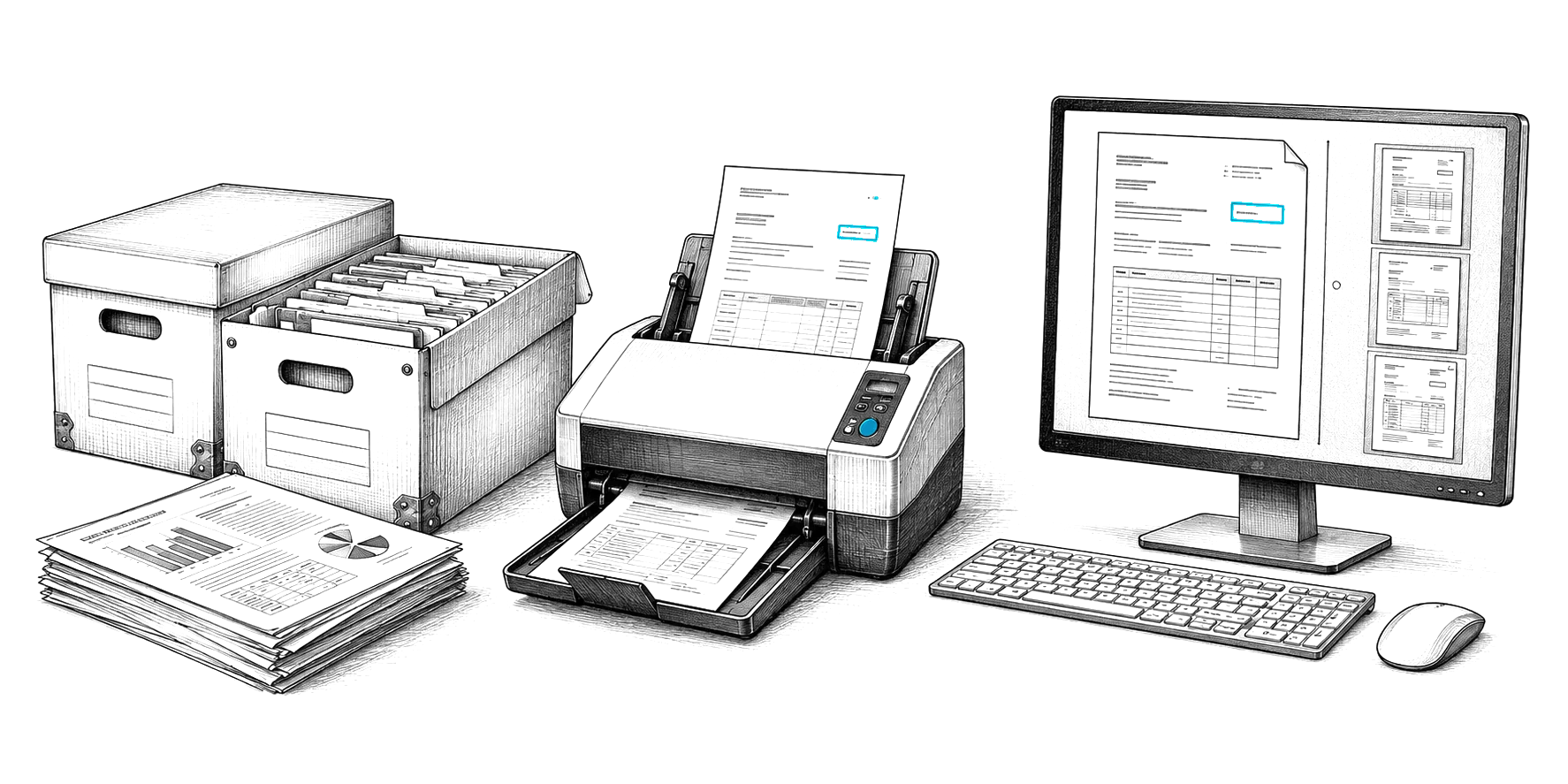
A branch can scan straight from the browser, or use CapturePoint 6, which splits a stack, recognizes each document and reads the numbers on the branch PC. Members and dealers can also email documents to a mailbox Content Central watches.

Scanning loan paper at the counter?

CapturePoint 6 splits a stack and reads loan applications, pay stubs, W-2s and statements on the branch PC. The free trial starts the first time you open it.

Ademero has built document software since 2002 for more than 1,000 organizations. Fortune 500 companies and government agencies review its security every year.

Free live demo

Bring a member file and your last exam request. We will walk through both.

Book a free demo and we will show you around, answer your questions and run your real paperwork through it. No cost, no pressure.
  • A live tour of the products that fit your work
  • Your own documents, set up and shown working
  • Your workflow and process, mapped with you
  • Straight answers from people who build it
Engraved illustration: file boxes, a document scanner and a PC at a desk