Skip to content

Hotels, restaurant groups and venues

Every department makes paper. The back office answers for all of it.

For controllers, HR managers, directors of catering and GMs. Event files, vendor invoices, incident reports and seasonal hiring paperwork, filed by property, found in a search and kept as long as the rules say.

One property, five departments, five kinds of paperGuest roomsGuest incident reportsSecurity, front office managerBallroom and salesEvent contracts and BEOsDirector of cateringHR officeI-9s, W-4s, tip recordsHR managerKitchen and receivingVendor and liquor invoicesPurchasing, controllerGM officeFranchise agreement, permitsGeneral manager, ownerOne property. Multiply by every property you run.
Each department makes its own paper and keeps it its own way. The controller, HR and the GM still have to find all of it.

A week of paper at one property.

Not a busy week. A normal one. Each day leaves a document that someone will need to find later.

  1. MonReceiving

    Weekend deliveries leave a stack of produce, linen, beer and wine invoices at the receiving desk.

    Read, filed by property, on the way to approval.

  2. TueCatering

    The couple swaps an entree for Saturday. The BEO goes to version 4.

    Kitchen and banquets on the same version.

  3. WedHR

    Summer hires start. Section 2 of each Form I-9 is due within 3 business days.

    Know whose I-9 is not finished.

  4. ThuSecurity

    A guest slips on the pool deck. The night manager writes it up by hand.

    Kept private, kept for years.

  5. FriSales

    Next spring’s conference contract comes back signed, with a room block.

    Filed with the deposit and the block.

  6. SatBanquets

    The wedding. The banquet check is signed at the end of the night.

    The event file closes complete.

  7. SunGM

    The owner asks when the franchise agreement’s renewal window opens.

    An answer from a search, not a drawer.

Four reports nobody wants to write.

Each one starts with a piece of paper that existed. It just was not where anyone could find it.

Report 001Security

Slip and fall, claim filed 18 months later

What happened
The guest’s attorney asks for the incident report, the photos and the pool deck inspection log.
Where the paper was
A binder in the security office. The night manager who wrote the report left last spring.
What it cost
The property starts its defense without its own account of what happened.
Report 002Catering

The kitchen cooked from the wrong BEO

What happened
The client moved to a gluten-free entree in version 4. The kitchen printed version 2 from an old email.
Where the paper was
Three versions in three inboxes, and a printout on the pass.
What it cost
A comped dinner, an apology to the couple, and a review you will read for years.
Report 003HR

An I-9 inspection, the week after the season

What happened
A Notice of Inspection gives you at least 3 business days to produce Forms I-9 for current and recent staff.
Where the paper was
In boxes at four properties. Some Section 2s were never finished during the rush.
What it cost
Paperwork errors can bring fines for each form.
Report 004Accounting

The same linen invoice, paid twice

What happened
The property paid the paper original. Corporate paid the PDF the vendor emailed a week later.
Where the paper was
One copy in a property tray, one in the controller’s inbox, never side by side.
What it cost
You get it back only if someone notices.

A worked example

One wedding, one event file.

The director of catering sets up the event file once: these seven documents belong to every event, and the event number ties them together. In Content Central this is a packet template.

From then on nobody builds the file. The signed contract, the deposit receipt from accounting, the band's certificate of insurance scanned at the front desk: each one joins EVT-0614 the moment it is filed with that number.

The BEO changes four times. Each change is a new version of the same document, so the kitchen, the banquet captain and the client all open version 4, and versions 1 to 3 are still there if anyone asks what changed.

On Thursday the file still shows the final guarantee as missing, so a reminder goes to the event manager. When the banquet check arrives Sunday morning, the file turns complete. That sends the final invoice to the controller and merges everything into one PDF for the client.
One wedding, one event fileEvent file EVT-0614Saturday wedding, Grand BallroomEvent contractSigned by the client by emailDeposit receiptFiled by accountingBEOVersion 4 is current; 1 to 3 keptv4Room block agreementFrom the sales officeVendor certificates of insuranceBand and floristFinal guaranteeHeadcount, Thursday noonBanquet checkSigned Saturday nightComplete, 7 of 7Final invoicerouted to the controllerOne PDF for the clientmerged from the whole file
Every document filed with the event number joins the event file on its own. When the last required one arrives, the file turns complete.

What changes, department by department.

Content Central is the one place every property files to, with CapturePoint 6 doing the scanning in each back office.

Sales and catering

Director of catering, event managers

  • Send the event contract to the client by email for signature. They sign in the browser with no account, and the signed PDF is saved as a new version.
  • Check a BEO out to change it and check it back in. Everyone who opens it gets the current version; the history keeps every earlier one.
  • An event file per event number shows what is still missing, from the deposit receipt to the final guarantee.

Purchasing and accounting

Controller, purchasing, AP

  • CapturePoint 6 in each back office reads vendor invoices: vendor, invoice number, PO, dates, totals and every line item.
  • Invoices route by property: the GM approves, anything over your limit goes on to the controller, and approvals that wait too long escalate.
  • An invoice number already on file is flagged before it is filed twice. Approved bills export to QuickBooks, Sage 50, Sage X3 or Workday.

Human resources

HR manager, payroll

  • Email new hires their onboarding forms as fillable PDFs. They submit without an account, and the form and its data file together.
  • An onboarding file per employee shows whose I-9 or W-4 is missing, and a rule reminds HR while it still is.
  • I-9 files can require a stated reason before anyone opens them, and each property sees only its own staff.

Security and risk

Director of security, risk manager

  • Incident reports live in their own restricted document type, and every view, download and change is in the audit trail.
  • A retention schedule keeps them for the period you set. When a demand letter arrives, mark the file Retain Indefinitely for a legal hold.

Ownership and the GM

General manager, asset manager

  • Franchise and management agreements, liquor licenses and health permits are a search away from any property.
  • A rule emails the owner a set number of days before any expiration or notice date on file.

The rules your files answer to.

US starting points for hotels and restaurants. Confirm the periods for your states with counsel, then set each one once as a retention schedule.

  • Form I-9

    Section 2 within 3 business days of the first day of work. Keep each form 3 years after the hire date or 1 year after employment ends, whichever is later. A seasonal worker rehired within 3 years of the original form can be handled on Supplement B instead of a new form.

  • Tip credit records under the FLSA

    If you take a tip credit, your payroll records must show the tips each tipped employee reported. Keep payroll records at least 3 years.

  • Alcohol purchase invoices

    Many state liquor authorities require licensees to keep alcohol purchase invoices for a set number of years, and some want them at the licensed premises. Check your state.

  • Guest registration records

    Some states and cities require lodging operators to keep guest registers for a set period. Your local ordinance sets how long.

  • Incident reports

    Keep them at least until your state’s deadline for injury claims passes, and put a legal hold on the file the day a claim or demand letter arrives.

  • Franchise agreements

    Renewal, transfer and notice windows are written into the agreement. Put those dates on file so a reminder can find them.

Questions from multi-property teams.

Our properties have different owners and brands. Can each one see only its own files?

Yes. Content Central can limit access by a field such as property, so each property team sees its own documents while corporate accounting and HR see all of them. Permissions also work by document type, so only HR opens I-9 files and only risk opens incident reports.

We do not run servers at our properties. Does that rule Content Central out?

No. Content Central runs in the cloud or on your own servers, your choice. In the cloud there is no server to run. Either way every property uses it in a web browser, and approvers can approve or reject from a phone.

Do we need a scanner at every property?

Put CapturePoint 6 on a Windows PC wherever paper piles up: the back office of each hotel, or one office for a group of restaurants. Scanning is unlimited at each station. Properties with little paper can email PDFs to a mailbox Content Central watches.

Back-office scanning

Monday's receiving stack, scanned once

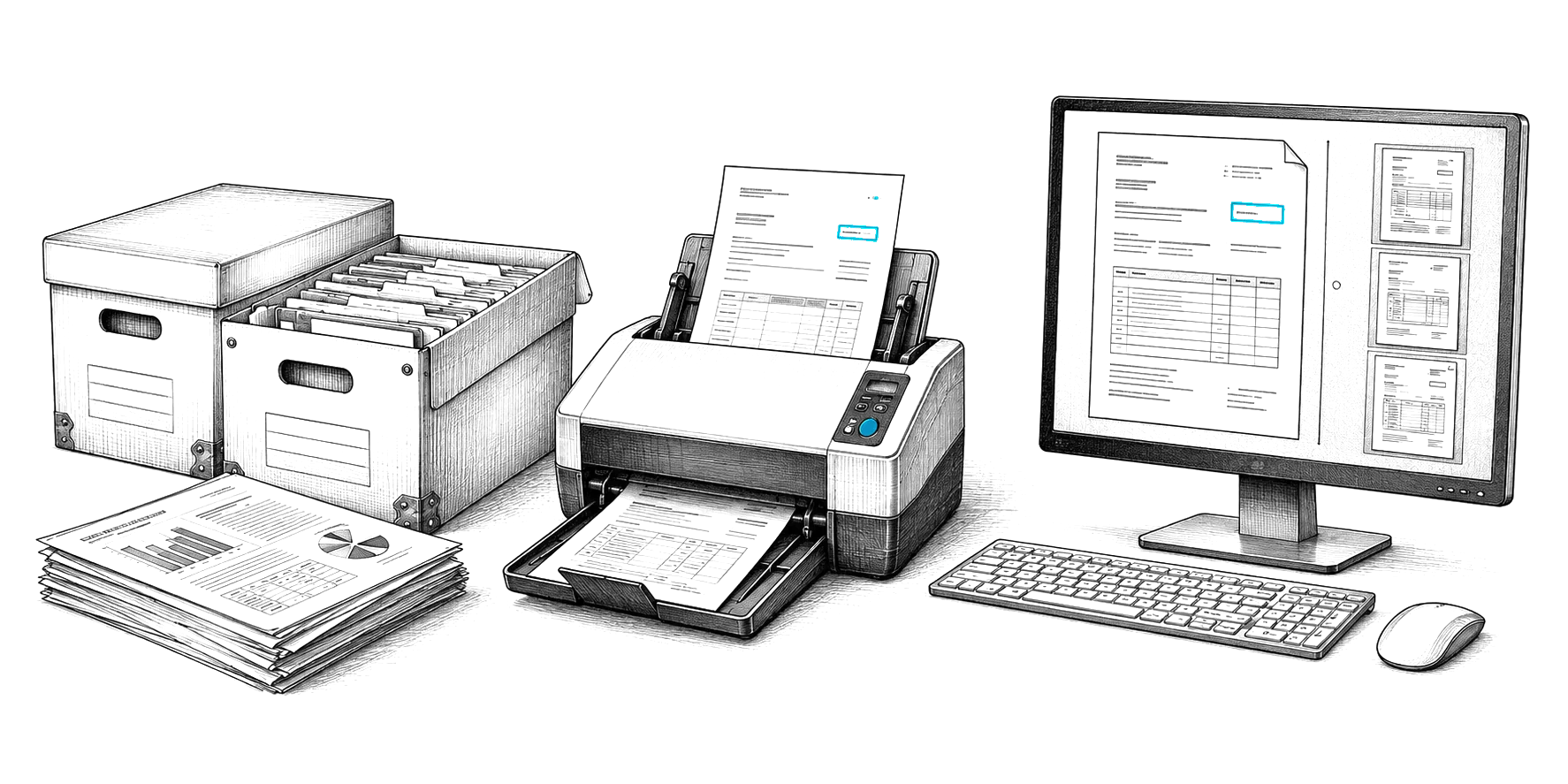
Put CapturePoint 6 on the back-office PC and scan the mixed pile as it is. It splits it into documents and knows what each one is:

  • Vendor invoices: vendor, invoice number, PO, dates, totals and every line, with quantity times price checked on each one.
  • New-hire paperwork: the I-9, the W-4, job offers and timesheets, with names, start dates and pay read where they appear.
  • Everything else, from banquet checks to inspection reports, it learns from the ones you confirm.

Each document is named from what it read and sent with its values to Content Central, ready for that property's approval route, or to a folder, SharePoint or OneDrive. The reading happens on that PC.

Ademero has made document software since 2002 for more than 1,000 organizations. Fortune 500 companies and government agencies review our security every year and keep renewing.

Free live demo

Bring one event file. We will set it up with you.

Book a free demo and we will show you around, answer your questions and run your real paperwork through it. No cost, no pressure.

  • A live tour of the products that fit your work
  • Your own documents, set up and shown working
  • Your workflow and process, mapped with you
  • Straight answers from people who build it
Engraved illustration: file boxes, a document scanner and a PC at a desk