Film, television, music and production companies
Every release on file before picture lock.
Talent and location releases, sync and clip licenses with their term and territory, music cue sheets, deal memos and royalty statements. Gathered by production, checked for gaps before delivery, and easy to find when a licensor or an insurer asks years later.
A production makes paper at every stage, and needs all of it at the end.
01
Development
- Option and purchase agreements
- Writer agreements
- Chain-of-title documents
02
Prep
- Deal memos
- Location agreements
- Certificates of insurance
- Crew start paperwork
03
Production
- Appearance and talent releases
- Location releases
- Call sheets and production reports
- Petty cash receipts
04
Post
- Sync and master licenses
- Archival and clip licenses
- Music cue sheets
05
Delivery
- Delivery schedule items
- Clearance documentation
- E&O certificate
06
Years after
- Royalty and participation statements
- License renewals by territory
The people who answer for it.
- Production coordinator
- Comes back from a shoot with a box: releases signed on clipboards, location paperwork, receipts, crew start packets. Has to get every one into the right production before anyone asks for it.
- Clearance and business affairs
- Owns the clearance log. Knows which cue is still unlicensed and which background performer never signed, and has to prove the rest to a distributor and an insurer.
- Rights and royalties
- Lives in term and territory: what each license allows, where, until when. Reconciles royalty and participation statements years after the production wrapped.
Three scenes nobody wants to shoot.
Scene 1. Delivery review
The distributor’s delivery schedule asks for every appearance release. Twenty-three are in the production folder. The twenty-fourth, a background performer from the pier scene, is in a box from that day, unscanned and unnamed. Delivery waits while someone goes through the box.
Scene 2. A new territory
A platform deal takes the series into Europe. An archival clip in episode 3 was licensed for North America only, but the territory was never recorded anywhere you could search. Nobody checks until the licensor does.
Scene 3. The cue sheet
The cue sheet stayed a draft after the final mix. It never reached the performing rights organizations, so the composer’s performance royalties stall, and the first anyone hears of it is a call from the composer’s agent.
CapturePoint 6
The box from the pier shoot, sorted by Wednesday.
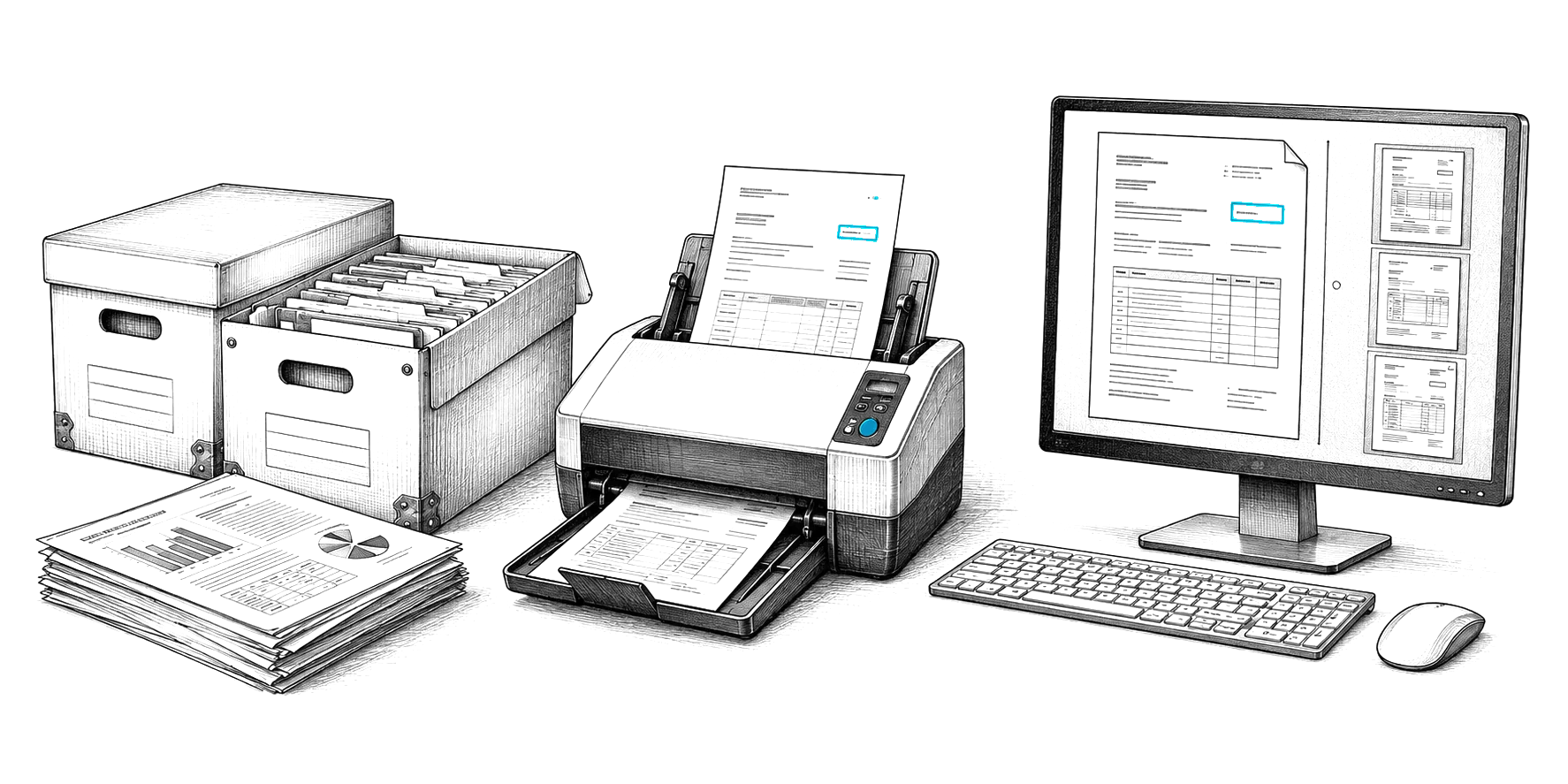
Releases signed on set come back as one thick stack. CapturePoint 6 runs on a Windows PC in the production office with your scanner, and turns the stack into named, searchable documents filed to the right episode.
The free trial starts the first time you open it. No form.
1.Teach it your forms once
Point it at a folder with a few of your own releases, location agreements and deal memos. It finds the document types and fields: performer name, production, episode, scene, date.
2.Scan the whole stack
It splits the stack into separate documents and sorts them by type. The reading happens on that PC.
3.Check only what it is unsure of
A smudged name or a missing date waits for a person, with the reason shown. Every confirmation teaches it, so the next shoot needs fewer checks.
4.Filed to the episode
Into Content Central with fields matched, into folders with file names built from the fields, or to SharePoint or OneDrive, Google Drive or Dropbox.
Content Central
The clearance log builds itself from what is actually on file.
A packet template lists the document types every episode needs and which are required. Anything filed with that episode number joins the packet, and the packet shows Complete or Incomplete with the missing types named. No spreadsheet to keep in step with the folders.
Releases do not have to come back on paper. Turn your release into a fillable PDF and email it to the performer from Content Central: they fill it in and press Submit without an account, and the completed release is filed with its fields in one step, logged with the submitter's IP address. Signature requests go to anyone with an email address.
When the last required document arrives, merge the packet into one PDF for the distributor or the insurer, and route it to business affairs for sign-off as one item.
Term and territory as fields, not as someone's memory.
Give every license its media, territory and term end as index fields. A workflow rule watches the dates and emails business affairs before a term runs out, and a search on territory and term end answers "can this episode stream there next year?" in one step.
| Licensed item | Licensor | Media | Territory | Term ends | Reminder |
|---|---|---|---|---|---|
| Archival clip, harbor fire, 1962 | Tidewater Archive Co. | TV and streaming | North America | May 31, 2031 | Feb 2031 |
| Sync license, cue 2M07 | Saltmarsh Music Publishing | All media | Worldwide | Perpetual | None needed |
| Still photograph, pier at dusk | Independent photographer | Broadcast and online | United States | Dec 31, 2028 | Oct 2028 |
| Mural, Bay Street | The artist | All media | Worldwide | Perpetual | None needed |
Example data. Swipe sideways on a phone to see every column.
Paige
Royalty statements, read line by line.
Statements from distributors, labels and publishers arrive as PDFs, each laid out differently: title, territory, period, units, rate, amount. Paige learns each layout from a few samples, pulls the fields and every line, and hands you clean data by download, SFTP or webhook for the reconciliation you already run.
Why the paper matters long after wrap.
01
Right of publicity
Most US states protect a person’s name and likeness by statute or case law, and the rules differ from state to state. A signed appearance or talent release is your proof of consent, for every person who can be identified on screen.
02
Copyright and chain of title
Distributors, financiers and insurers ask for chain of title: the agreements that show you own or control the underlying rights, from the option and purchase to the writer agreements.
03
E&O insurance and delivery schedules
Errors and omissions insurers and distributor delivery schedules commonly ask for clearance documentation: releases, licenses, cue sheets and the clearance log behind them.
04
Performing rights organizations
Cue sheets go to the performing rights organizations (in the US, ASCAP, BMI and SESAC), which use them to pay writers and publishers when the work is performed.
05
Employment paperwork
Crew start packets carry tax and work eligibility forms, such as Form W-4 and Form I-9, and their retention rules apply whoever is the employer of record.
06
How long to keep it
Keep releases and licenses for as long as the work is distributed, and longer for anything in dispute. Set retention per document type, and put a production on legal hold indefinitely when a claim comes in.
Content Central runs in the cloud or on your own servers, with permissions down to the document type and field, so deal terms and crew pay stay with the people allowed to see them. Ademero has served 1,000+ organizations since 2002, and Fortune 500 companies and government agencies review its security every year.
More on releases, licenses and production files
- SolutionDocument packets
- SolutionElectronic forms
- SolutionElectronic signatures
- SolutionContract management
- SolutionRecords retention
- GuideBatch scanning and document separation
- GuideAutomatic file naming for scanned documents
- GuideExtract data from PDFs
- TemplateRecords retention policy
- TemplateFile naming convention
- HelpGroup related documents with packets
- HelpShare a capture form outside Content Central
- HelpRemind the owner before a contract expires
Free live demo
Bring one episode's paperwork. We will build its production file with you.
Book a free demo and we will show you around, answer your questions and run your real paperwork through it. No cost, no pressure.
- A live tour of the products that fit your work
- Your own documents, set up and shown working
- Your workflow and process, mapped with you
- Straight answers from people who build it