Engineering firms · civil, structural, MEP, consulting
Every sheet, RFI and transmittal, on the project, on the right revision.
Drawings, specs, RFIs, submittals and transmittals filed by project number, checked out before anyone edits, approved before they are issued, and every earlier revision kept with who changed what. Document control your document controller does not have to hold together by hand.
Who keeps the record
Three people answer for every project file.
Role 01
Document controller
Keeps the drawing register, logs every transmittal in and out, issues the sets.
Answers “which revision did the contractor have on March 3?” more often than anyone would guess, and chases reviews that are past due.
Role 02
Project engineer
Answers RFIs, reviews shop drawings, writes and revises spec sections.
Needs the current sheet, the last RFI on it and the submittal history in one place, not in three folders and an inbox.
Role 03
Engineer of record
Seals and signs the work, and carries the liability long after closeout.
Needs to prove, years later, exactly what was sealed, what changed after, and who approved each change.
The project record
Eleven kinds of paper. One project number.
Every one of these gets a document type and index fields in Content Central: project number, discipline, sheet or spec section, revision, date. That is what lets anyone find it by what they know.
| Record | What it is | What has to stay true |
|---|---|---|
| Drawings | Plans, sections and details by discipline, issued as sets: for bid, for permit, for construction. | Must stay true: Everyone opens the current revision, and every issue can be traced. |
| Specifications | The project manual, section by section in MasterFormat order. | Must stay true: The spec matches the drawing issue it went out with. |
| RFIs | Contractor questions, numbered, with the engineer of record’s answers. | Must stay true: Answered by the right engineer, on time, and kept with the sheet it changed. |
| Submittals and shop drawings | Product data, shop drawings and samples, returned with a review action. | Must stay true: Routed to the discipline that owns it, with the action and comments kept. |
| Transmittals | The cover record of what went out or came in, to whom, when and why. | Must stay true: A complete log in both directions. |
| ASIs, bulletins, change directives | Changes issued after the construction set. | Must stay true: Linked to the sheets they revise. |
| Calculations | Structural, hydraulic, electrical load and other design calculations. | Must stay true: Filed with the issue they supported. |
| Signed and sealed documents | Sheets, reports and letters bearing the engineer’s seal. | Must stay true: Kept exactly as sealed, for as long as the firm carries the liability. |
| Correspondence and minutes | Project email, letters, OAC and coordination meeting minutes. | Must stay true: Filed to the project and searchable by any word. |
| Field and inspection reports | Site observation reports, special inspections, punch lists. | Must stay true: Dated and filed by project and discipline. |
| Closeout records | Record drawings, O&M manuals, warranties, completion certificates. | Must stay true: All present before the project closes. |
Where it goes wrong
Shared folders do not know which revision is current.
01 · Superseded sheet
Rev 1 was still in the shared folder.
The detailer pulled S-201 from a project folder that held S-201_rev1.pdf and S-201_final2.pdf. Steel arrived fabricated to the old footing layout. The fix took a field change and a week of calls about who had which sheet, when.
02 · Misrouted submittal
The air handler shop drawings sat in the wrong inbox.
A mechanical submittal went to the structural engineer, who was out that week. Nobody noticed until the contractor asked where the review was, and the review period in the spec had already run out.
03 · Closed project
Nine years later, a letter from a lawyer.
A claim lands on a project closed years ago. Counsel wants the sealed set as issued, the RFI answer that changed the detail, and who approved it. The answer is somewhere in off-site boxes and a retired engineer’s mailbox.
Content Central · document control
Every RFI and submittal routed to the engineer who owns it, on a clock.
- Check out before you edit
- Check Out locks a spec section or calc while one person works on it. Check In saves a new version. Content Director opens Word and Excel files in their own application and checks them back in on save.
- Revisions that stack, never overwrite
- A new issue is a new major version. Field edits, approval steps and signatures are logged as minor versions. Earlier issues stay in the document’s history with who did what, and when.
- Reviews with a deadline
- An approval process routes each submittal or RFI to the owning discipline, with a deadline, reminders and escalation to the project manager. Group rules can require every discipline lead to approve an issue.
- Sign-off stamped on approval
- A checker or QA/QC reviewer approves with a PIN and their saved signature is stamped at a set spot. Your engineer’s seal is applied the way your state board requires, and the sealed PDF is filed as its own version.
- Names built from the fields
- Folder paths and file names come from project number, sheet, revision and type, so 2417_S-201_Rev2.pdf is never typed by hand and never guessed at.
- Each team sees its projects
- Permissions by catalog, document type and field. Limit access by a field value such as client or office, and require a stated reason before anyone opens a sensitive file.
Project email comes in two ways: a project mailbox that Content Central watches (Microsoft 365, Gmail or any IMAP mailbox), and a Content Central ribbon in Outlook, Word and Excel for filing a message or a draft straight to the project. Project numbers and client names can be looked up from your project accounting database as documents are filed.
Worked example
Submittal 05 12 00-003, structural steel shop drawings.
Project 2417, a pump station. Here is the same submittal with Content Central running document control.
Monday, 8:10
The contractor emails the shop drawings to the project mailbox. Content Central files the PDF to project 2417 as a Submittal, reads the spec section from the subject line, records the sender and names the file from those fields.
Monday, 8:11
A workflow rule starts the review: the structural group, a deadline set to match your submittal procedures section, and the document attached to the arrival email with approve and reject links.
Thursday
The reviewer marks up the drawings, sets the action to Make Corrections Noted, adds a note and approves with a PIN. Their saved signature is stamped in the review block. Each step is a new minor version.
Thursday, later
The document controller sends the reviewed set back with a transmittal. The outgoing transmittal is filed to the same project, so the log is complete in both directions.
Nine years on
Counsel asks about the connection detail. A search for 05 12 00 in project 2417 returns the submittal, the reviewed version, the reviewer, the action, the dates, and the RFI that changed the detail.
Closeout and retention
Know the project file is complete before you close it.
A packet gathers every document filed with the same project number and checks it against the record types you require. Nobody assembles it: documents join as they are filed, and the packet shows Complete or Incomplete with the missing types listed. An Incomplete Packets report can run every week across all your open closeouts.
Then retention takes over. Set a period per document type, and keep any project on legal hold indefinitely when a claim or dispute comes in. When it is complete, merge the packet into one PDF for the owner.
CapturePoint 6 · the back catalog
Twenty years of project boxes, read and filed by project.
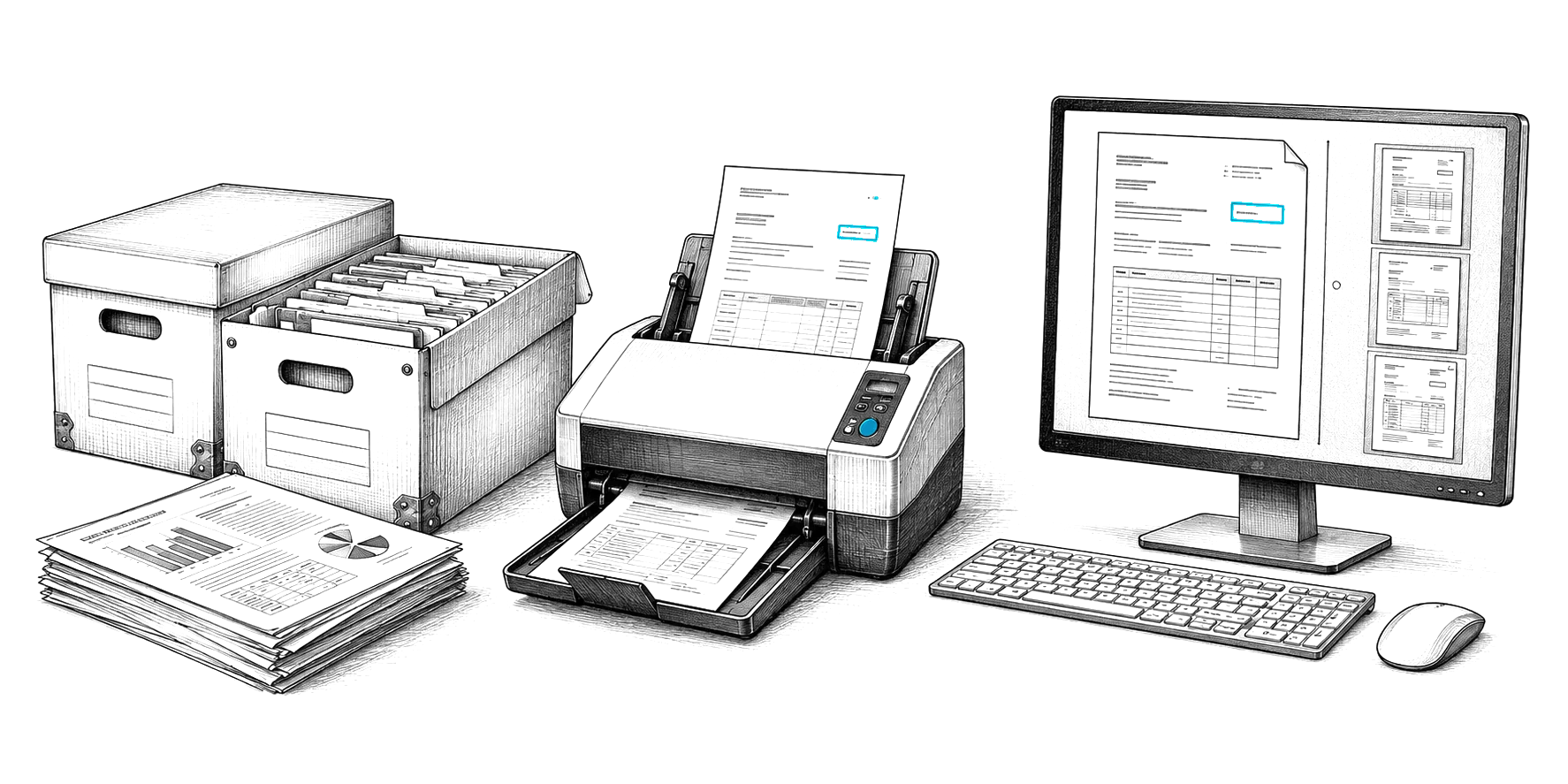
Most firms have closed projects in banker’s boxes: transmittals, field reports, sealed letters, calc packages, meeting minutes. CapturePoint 6 scans them on a Windows PC with your TWAIN scanner, or imports PDF and TIFF files you already have.
The free trial starts the first time you open it. No form.
- 01
Point it at a folder of samples
A few scanned transmittals, field reports and letters. It finds the document types and fields on its own: project number, transmittal number, date, discipline.
- 02
Feed the boxes
It splits each stack into documents, sorts them by type and reads the fields. The reading happens on that PC.
- 03
Confirm what it is unsure of
Anything uncertain waits for a person, with the reason shown. It learns from every confirmation, so the next box needs fewer.
- 04
Send it where the projects live
Into Content Central with fields matched to the project catalog, or to folders as searchable PDF or PDF/A with names built from the fields.
The rules behind the record
What your records have to answer to.
State board rules on seals and signatures
Each state’s engineering licensing board sets how a licensed engineer seals and signs drawings, specifications and reports, including electronic seals. Keep the sealed file exactly as issued, as its own version, and you can show what was sealed and when.
ISO 9001 document control (clause 7.5)
If your firm runs an ISO 9001 quality system, documented information must be approved before issue, show its changes and revision status, and be kept from unintended use once obsolete. Check-in, approvals and version history support that document control.
Statutes of repose and limitation
Claims against design professionals can arrive years after substantial completion, and how many years depends on the state. Set retention per document type to cover your longest exposure, and place anything in dispute on legal hold.
Public clients and public records laws
Work for a city, county, transportation department or school district can make project records subject to state public records requests and the agency’s own retention schedule.
Owner agreements
Many owner contracts say how long project records must be kept and give the owner the right to review them. Retention per document type keeps that promise without a calendar on someone’s desk.
Content Central runs in the cloud or on your own Windows servers, where project files stay in your environment. Ademero has served 1,000+ organizations since 2002, and Fortune 500 companies and government agencies review its security every year.
Free live demo
Bring one project. We will set up its document control with you.
Book a free demo and we will show you around, answer your questions and run your real paperwork through it. No cost, no pressure.
- A live tour of the products that fit your work
- Your own documents, set up and shown working
- Your workflow and process, mapped with you
- Straight answers from people who build it